




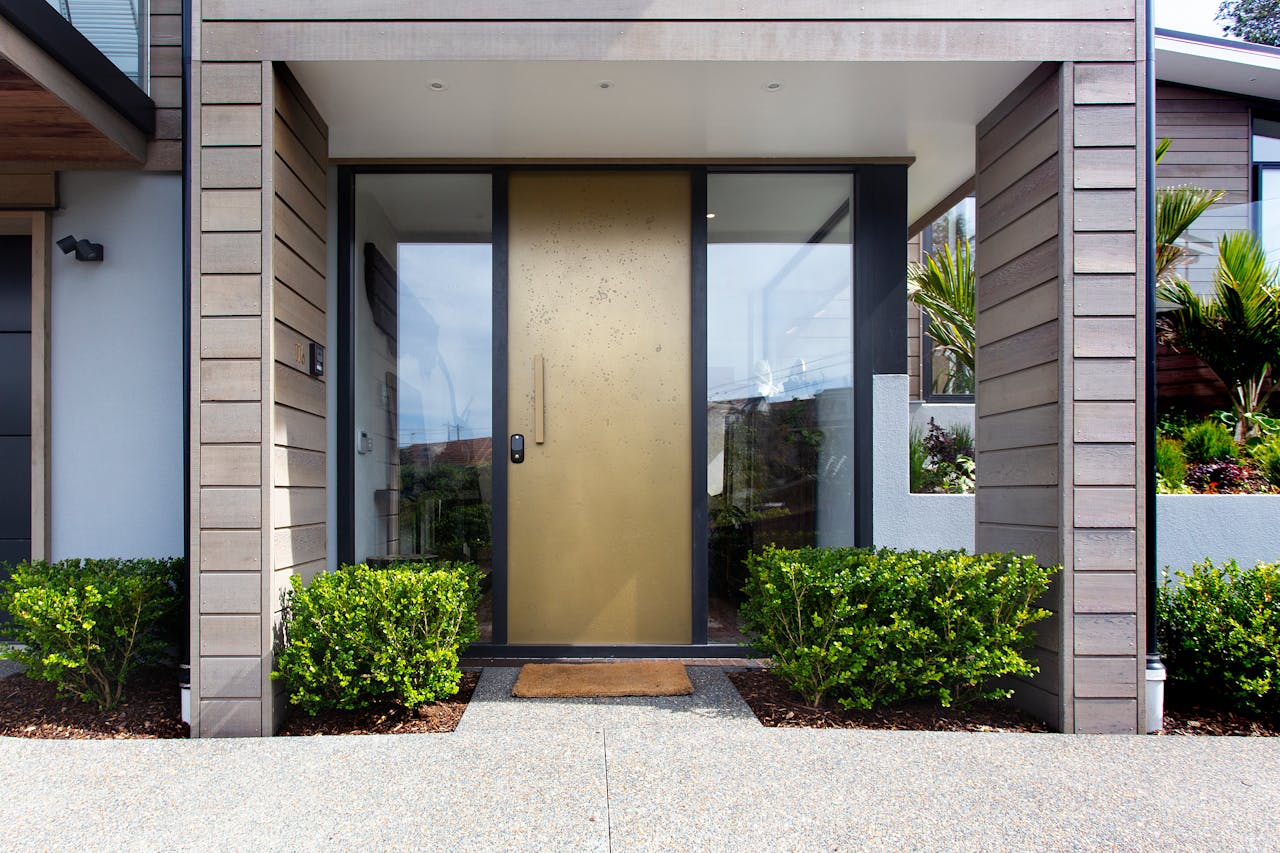
Front doors – what security features are most important?
Back to guideFront doors – what security features are most important?
The ingenuity of burglars and the creativity of thieves who want to break through doors and force their way into a room is not out of bounds. They can use sophisticated methods, lock picks or duplicates of stolen keys, or forceful ways “axe, hoe, ball, baton”, as long as they can get inside the facility. How does modern technology deal with these problems, and how to ensure the security of the front door in the best possible way?
What are the key features of secure entry doors?
The issue should be approached comprehensively – from ordering the right model and installation by professionals to the selection of additional security features, i.e. appropriate hinges, lock inserts and door locking systems. Be aware that thieves are also professionals and will not play with half-measures – they will simply look for the weakest points of the door leaf and try to break it. They may expose the door from its hinges, drill through the lock or break the glass to try to open it from the inside. So, if we are particularly concerned about security, it is worth reading the door specifications and asking manufacturers or distributors about additional options, such as B or C class lock inserts or structural reinforcements.
It is, of course, important to choose products from reputable companies that meet the appropriate security standards, confirmed by the relevant certification bodies. Looking at the product sheet and technical data is like looking at a candidate’s resume, and a solid exterior door should have several strong points that will allow you to hire it as a security guard at the entrance. If you don’t invest in a typical high-end burglar door, it’s definitely worth supplementing the standard variants with all the security options available for them.
Are multi-point locks essential for door security?
Multi-point locks, which operate by turning a key and locking bolts simultaneously at several points along the edge of the door, are a relatively solid barrier that can quickly deter a thief, while the entire mechanism is correlated through a control bar. A multi-point lock can include bolts, hooks, bolts, sliders or locking handles, among others, which together create a cumbersome structure for a burglar – too time-consuming to unravel and get inside in a short time.
What kind of locks for front doors to choose? The typical configuration of such solutions includes locking points that are located above and below the main lock and additional ones in the side edges of the door. These locking points, controlled by a single main mechanism, allow the door to be conveniently locked with a single key movement and activate three or four locks simultaneously. Breaking them will, relative to forcing through classic locks, cost much more effort, and thus deter intruders from attempting to break in.
What types of glass are recommended for secure entry doors?
Tempered glass in double-glazed or triple-glazed packages is the standard used for glazing entrance sashes. These packages are created from sheets of very strong glass, separated from each other by a spacer and with the space between them filled with noble gas. As a result, they are durable, have great insulating properties and effectively protect against outside noise. Are they safe glazing for front doors? Here it is necessary to pay attention to another of the parameters, namely that they belong to class P1 – such glazing is made of two sheets of glass 3 mm thick, with a layer of anti-burglary film pasted between them, which impedes access to the interior of the building by keeping the glass whole even after it breaks. As a result, the glass still remains an effective barrier against burglary after it has been brutalized with sharp tools.
Can alarm systems be integrated with the front door?
State-of-the-art solutions, moving with the times and utilizing innovations in the field of electronics, are boldly making their way into security systems, which include front doors, alarm systems, motion sensors and monitoring, as well as additional forms of authorization, such as fingerprint readers or combination locks. The door leaf is thus not only a physical, solid element that is a barrier to a burglar, but can also be armed with the advances of modern technology – hiding the watchful eye of a camera or biometric security features that require a fingerprint to unlock.
Alarm systems can already report attempts to open the door, rather than only after the door has been forced and the motion detectors have been triggered. This kind of setup limits the amount of time a thief could have to rob from the moment the alarm siren is tripped and a notification is sent to the security company – his escape from the scene before anyone realizes it would be highly likely. Meanwhile, smart security systems allow suspicious movements and unusual events to be tracked with notifications on a mobile app. If someone approaches the door or starts tinkering with it, we can check the situation on the surveillance cameras or call the appropriate services after the alert is triggered.
How does the material of the door affect its security?
Steel doors may look solid, but the cheapest solutions made of thin sheet metal and with poor locks can at best scare off amateurs – a well-prepared and knowledgeable thief will find the hot spots and it is from them that he will start his attempt to get inside. So, more important is what kind of construction hides inside and whether additional reinforcements and multi-point locks are present in a particular door model. Of course, from the point of view of materials, these are the most effective solutions, with which solid wooden doors can compare. These, however, are very heavy, cumbersome to maintain and prone to the passage of time, and poor when it comes to fire resistance.
There is still the question of PVC entrance sashes, because here their filling is the most important from the point of view of tenant security. If they are to provide protection against forcible methods of entry, then they must be equipped with special anti-burglary inserts, made of metal or other material of increased strength, which will make it more difficult to attempt to force the door. The mechanical strength of PVC alone will be far too small to guarantee an adequate level of security, so when choosing this exterior door material it is especially worth investing in solid structural reinforcements.
See also
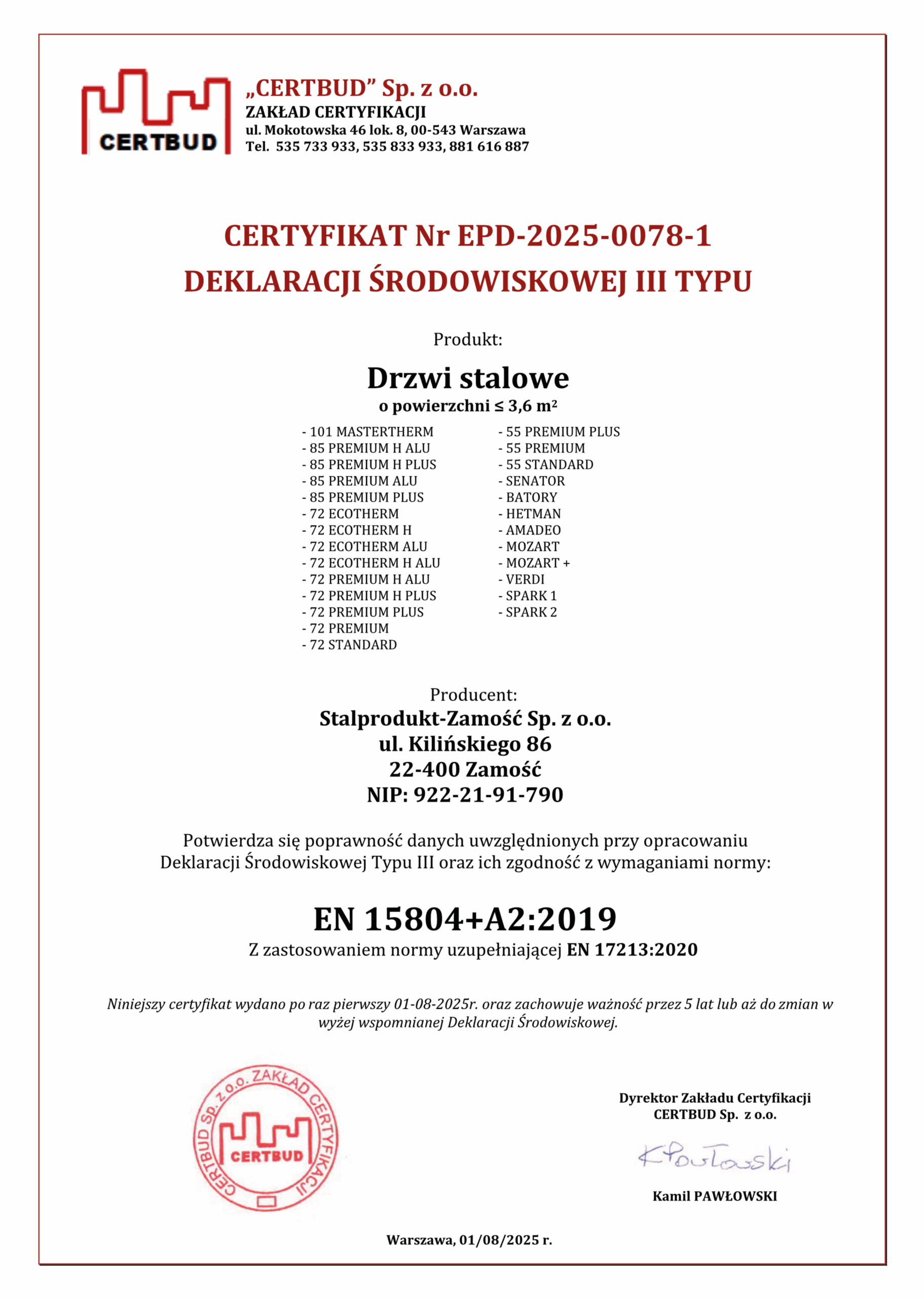
EPD – the certificate of the future in the industry
At Stalprodukt-Zamość Sp. z o.o., we believe that responsibility for a product does not end with its functionality,…Read more
What color exterior door to choose for your home? Practical tips
What color exterior door to choose for your home? Practical tips Choosing an exterior door is a decision…Read more
When to install exterior doors in a new home, and when to install interior doors?
When to install exterior doors in a new home, and when to install interior doors? The construction of…Read more