




How to choose a glass door for a modern home?
Back to guideHow to choose a glass door for a modern home?
Doors are not just a barrier, defending entry or separating two adjacent rooms. However, they cannot be deprived of their decorative qualities, which are invariably important – hardware, elaborate ornamentation or colorful stained glass accompanied entrance and interior doors basically from the beginning of their popularization in the form we know today. Among other things, it was the widespread use of glass that contributed to the fact that once gloomy interiors, hitherto separated by a monolithic door, could gain a completely different character by letting in a bit of natural light. Is glass in doors still fashionable, and how do doors with glass look in the modern interpretation of interior designers?
Why choose a glass door for a modern home?
Although, as we know, trends can change quite smoothly, sometimes going from one extreme to another, when it comes to glazing in doors, it has not lost its popularity. The types of glazing used are different, of course, as well as the possibilities of arrangement, because finally the technical possibilities have fully caught up with the imagination of designers. From a utilitarian point of view, doors are always the border of two worlds – external and internal, warm or cold, private or public. Not surprisingly, they are often chosen for the best possible thermal, sound and visual insulation, which in effect gives a certain advantage to traditional solid door leaves. Nevertheless, contemporary glazed doors have caught up with them in terms of these parameters, and the differences are really starting to become less and less noticeable.
What types of glass are used in glazed doors?
Modern glass doors are made perfectly aesthetically, but the non-negligible issue is, of course, security. This is all the more important the larger the glazed area of individual models. While in front doors triple-glazed packages with additional protective film are the result of manufacturers’ care to protect the house from intruders trying to sneak inside, significant progress has also been made in the field of interior door glazing. Commonly used tempered glass is much more resistant than ordinary glass to mechanical damage, while once it breaks, it shatters into thousands of tiny pieces with rounded edges. Tempered glass pane is formed by heating ordinary glass to a temperature of more than 600 degrees Celsius, and then quickly following cooling. As a result, the resulting product is much more resistant to impact and stress, while if it already gives way to a greater force, it shatters in a way that minimizes the risk of serious injury. Laminated safety glass is made by bonding two glass sheets together using a special film. Even after a strong impact, it does not shatter into sharp pieces like traditional, ordinary glass and holds together precisely because of the bonding film layer. This significantly reduces the risk of wounds and injuries if such glazing is broken, which in itself is not easy.
What are the advantages of glazed doors in terms of interior lighting?
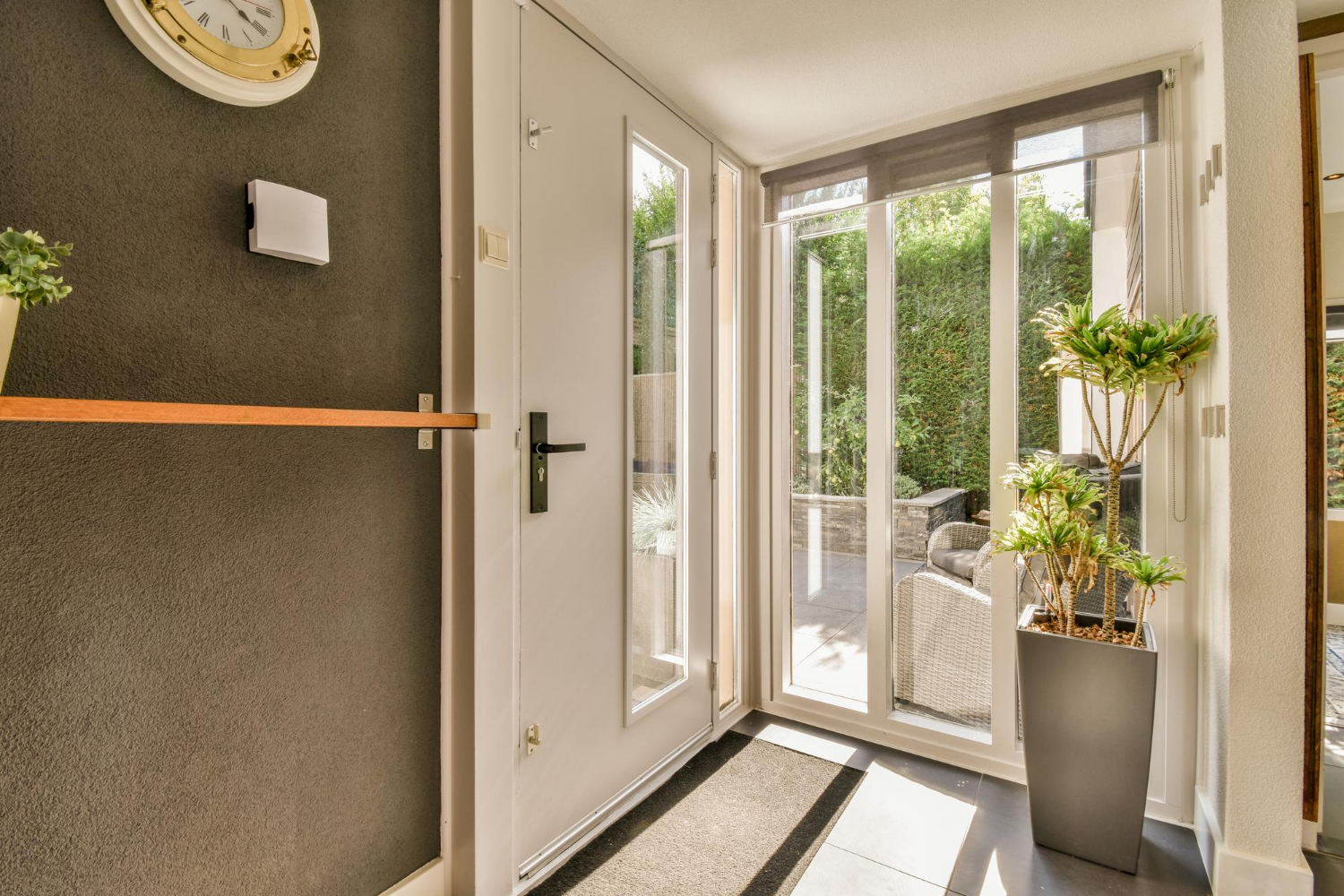
It’s not hard to see that many contemporary house designs rely on as much glazing as possible on the walls, and fashionable and practical large-area or corner windows allow you to benefit from natural daylight without the need to illuminate the interiors with lamps. In this context, glazed doors are a great two-in-one solution. – They can separate rooms that should naturally remain closed, such as a bathroom, laundry room or hallway, while allowing daylight to flow unobstructed between them. This also affects the comfort of moving about the house and increases safety, especially if children live there. Completely translucent glass provides the greatest light penetration, while when you want more privacy or want to limit the light penetration of glass door elements, it is better to choose glazing made of partially translucent glass, such as sandblasted glass. You can also use a solution that has been known for years, using a Venetian mirror, bearing in mind that here the translucency changes depending on the degree of interior lighting. This is recommended especially for front doors, as it reflects light when it is brighter outside than inside the building and does not allow you to look inside during the day.
What safety features are key when choosing a glazed door?
The best door manufacturers never put the safety of their customers and the savings from cutting costs or using unapproved materials at stake. The same goes for what kind of glass is used in doors. So if we like loft-type glass doors, where the entire construction is based on placing a single, huge sheet of glass in a frame structure, there can be no doubt that the whole thing has been thoroughly tested and analyzed for use and safety. The same is true, for example, in the case of shower enclosures or mirrors, which are also elements of the sliding doors of a built-in closet. Resistance to impact, stress or changing temperatures is the most important and rigorously treated in the case of glazing in doors. Tempered or laminated glass makes it possible to achieve a durability almost equal to that of solid doors.
How to integrate glazed doors with other architectural elements?
Large windows and showcases without opening sashes, the abandonment of heavy curtains, fine and decorative mirrors and efficient, intense LED lighting – these elements belong to the canon of contemporary inspiration when it comes to furnishing living and leisure spaces. Great in all of this are glazed doors, which use subtle glass, positively contributing to an even better feeling of space and freedom in the apartment. What kind of glazing for the door to choose? This is a legitimate question if you want to transform the interior design, add lightness and visually enlarge it – the more daylight comes in, the cozier and more spacious the room will be. The perception of such places as a corridor or hallway, where windows are usually missing, is completely changed. Exterior doors with glass or double doors with fanlights can do wonders when it comes to visually transforming a gloomy vestibule. The same goes for doors separating individual rooms in the house – here you can bet on doors with small glass inserts, made of milky, frosted glass, which on the one hand provide intimacy, and on the other hand allow the sun’s rays to penetrate into the underexposed corridor.
See also

EPD – the certificate of the future in the industry
At Stalprodukt-Zamość Sp. z o.o., we believe that responsibility for a product does not end with its functionality,…Read more
What color exterior door to choose for your home? Practical tips
What color exterior door to choose for your home? Practical tips Choosing an exterior door is a decision…Read more
When to install exterior doors in a new home, and when to install interior doors?
When to install exterior doors in a new home, and when to install interior doors? The construction of…Read more